Commercial carpet in a Houston office, retail space, or medical facility looks fine for the first few months. Then it starts to show traffic lanes. Then the fibres flatten. Then a smell develops that no amount of daily vacuuming addresses. By the time most business owners take action, the carpet has already deteriorated past the point where cleaning fully restores it. Understanding how carpet cleaning in Houston works for commercial spaces, and what routine maintenance should look like before that point, keeps carpets in service longer and keeps the space looking the way it should.
What Vacuuming Does and What It Cannot Do
Daily or frequent vacuuming is the most important maintenance step for commercial carpet, but it has real limitations that business owners need to understand.
Vacuuming removes loose surface debris and the top layer of dry soil from the fibres. It does not remove the soil that has bonded to the fibre itself through foot traffic, pressing it deeper into the pile. It does not remove oily residues from food, beverages, and outdoor contaminants tracked in on shoes. And it does not address the bacteria, allergens, and mould spores that accumulate inside the carpet backing in humid conditions.
Houston’s humidity accelerates the growth of mould and bacteria in carpet backing compared to drier cities. A carpet that looks clean after regular vacuuming can carry significant microbial contamination in the layers that vacuuming does not reach.
How Often Does Commercial Carpet Need Professional Cleaning
The right cleaning frequency depends on how much traffic the carpet handles, what types of contaminants it is exposed to, and what industry the business operates in.
General guidelines for Houston commercial spaces:
- High-traffic areas like lobbies, corridors, and building entrances need hot water extraction cleaning every one to two months
- Moderate-traffic areas like open offices and conference rooms need cleaning every two to three months
- Low-traffic areas like private offices and storage rooms may manage with quarterly or bi-annual cleaning
- Healthcare and food service environments follow stricter schedules determined by industry standards and health code requirements
The Carpet and Rug Institute recommends professional hot water extraction as the primary deep cleaning method for commercial carpet because it removes the bonded soil and residue that interim methods cannot address.
Also Read: What Do Janitorial Services Include?
The Difference Between Interim Cleaning and Restorative Cleaning
Many businesses use encapsulation or bonnet cleaning as their only carpet maintenance method because it is faster and cheaper than hot water extraction. These are interim methods, meaning they address surface soil and improve appearance without performing a deep clean.
Encapsulation cleaning applies a chemical that crystallises around soil particles so they can be vacuumed out. It works for maintenance between deep cleans, but leaves residue behind over time that builds up and attracts more soil.
Bonnet cleaning uses a rotary machine with an absorbent pad to remove surface soil. It cleans the top of the carpet fibre pile without penetrating to the backing. For a space that had its last hot water extraction six months ago, bonnet cleaning temporarily improves appearance but does not address what has accumulated in the lower fibre layers.
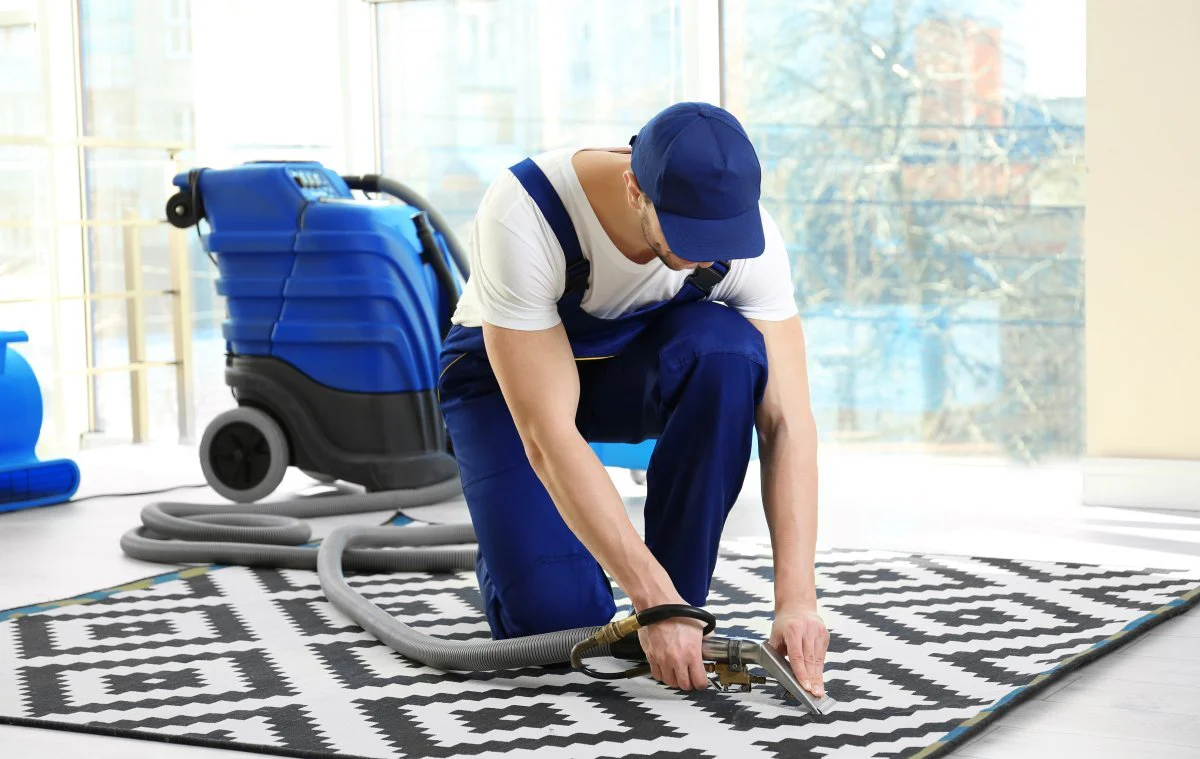
Hot water extraction injects hot water and a cleaning solution into the carpet pile under pressure and immediately extracts it along with the loosened soil. This is the only method that reaches the full depth of the carpet pile and removes what interim methods leave behind.
For office cleaning services that include carpet maintenance, a programme combining regular interim cleaning with scheduled hot water extraction at the right intervals produces the best long-term outcome for carpet condition and lifespan.
Dealing With Stains Before They Set
Stains in commercial carpet become permanent when the wrong response happens in the first few minutes. Coffee, food, ink, and tracked-in mud all respond differently and require different treatment. Applying the wrong product or rubbing the stain rather than blotting it pushes the contamination deeper into the fibres and sets it.
The correct immediate response for most liquid spills:
- Blot the area with a clean white cloth to absorb as much liquid as possible without spreading it
- Work from the outside edge of the stain toward the centre to prevent spreading
- Apply a pH-neutral spot cleaner and blot again, rather than scrubbing
- Allow the area to dry completely before traffic resumes over it
For oil-based stains from food or machinery, a different solvent-based treatment is required before the water-based cleaning step. Using water on an oil-based stain without pre-treatment emulsifies the oil and spreads it wider.
What Houston’s Climate Does to Carpet
Houston’s combination of high humidity and air-conditioned interiors creates a specific problem for commercial carpet. When humid outdoor air enters the building through foot traffic and door openings, it meets the cooled indoor air, and the moisture settles into the carpet backing. This creates conditions for mould and mildew growth in the fibre base that is not visible from the surface.
Businesses notice this most often as a musty odour that develops despite regular cleaning. The smell is coming from microbial activity in the backing, not the top layer of the carpet. Hot water extraction combined with proper drying time addresses this, but only if the drying step is managed correctly.
Leaving wet carpet in a humid environment without adequate air circulation creates a secondary mould problem. Professional cleaning in Houston commercial spaces accounts for this by using extraction equipment that removes as much moisture as possible and scheduling cleaning at times when HVAC airflow and air movers can dry the carpet within a few hours.
When Carpet Replacement Makes More Sense Than Cleaning
No cleaning method restores carpet that has reached the end of its service life. Matted fibres that do not recover after cleaning, permanent staining across high-traffic paths, backing delamination, and persistent odour that returns after cleaning all indicate the carpet is past the point of restoration.
For Houston businesses evaluating whether to clean or replace, a professional assessment before committing to another cleaning cycle saves money. A carpet that needs replacement in six months, regardless of cleaning, is not worth the cleaning cost at this stage.
For buildings where carpet replacement is the right decision, combining the replacement with a review of floor cleaning services for hard surface areas gives the property manager a full picture of the floor maintenance programme going forward.
Keep Your Houston Office Carpet in Good Condition With American Janitorial Houston
American Janitorial Houston handles carpet cleaning in Houston for commercial offices, medical facilities, retail spaces, and building common areas across the city, using hot water extraction and interim maintenance programmes scaled to your traffic volume and industry. If your carpet is overdue for a professional clean or you want a scheduled maintenance programme that keeps it in good condition between deep cleans, contact us today, and we will assess your carpet condition and put together a cleaning plan that fits your budget and schedule.